Atlas Obscura recently re-posted an article, Remembering When Americans Picnicked in Cemeteries. Author Jonathan Kendall wrote, “Since many municipalities still lacked proper recreational areas, many people had full-blown picnics in their local cemeteries… One of the reasons why eating in cemeteries become a “fad,” as some reporters called it, was that epidemics were raging across the country: Yellow fever and cholera flourished, children passed away before turning 10, women died during childbirth. Death was a constant visitor for many families, and in cemeteries, people could “talk” and break bread with family and friends, both living and deceased.”
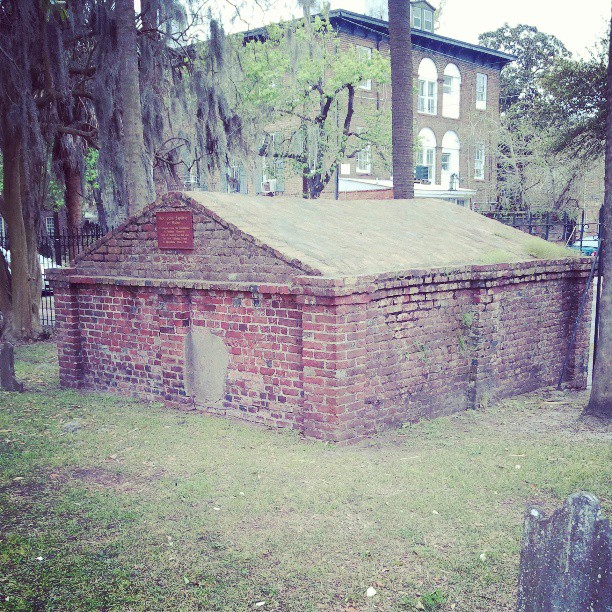
Colonial Park cemetery mausoleum
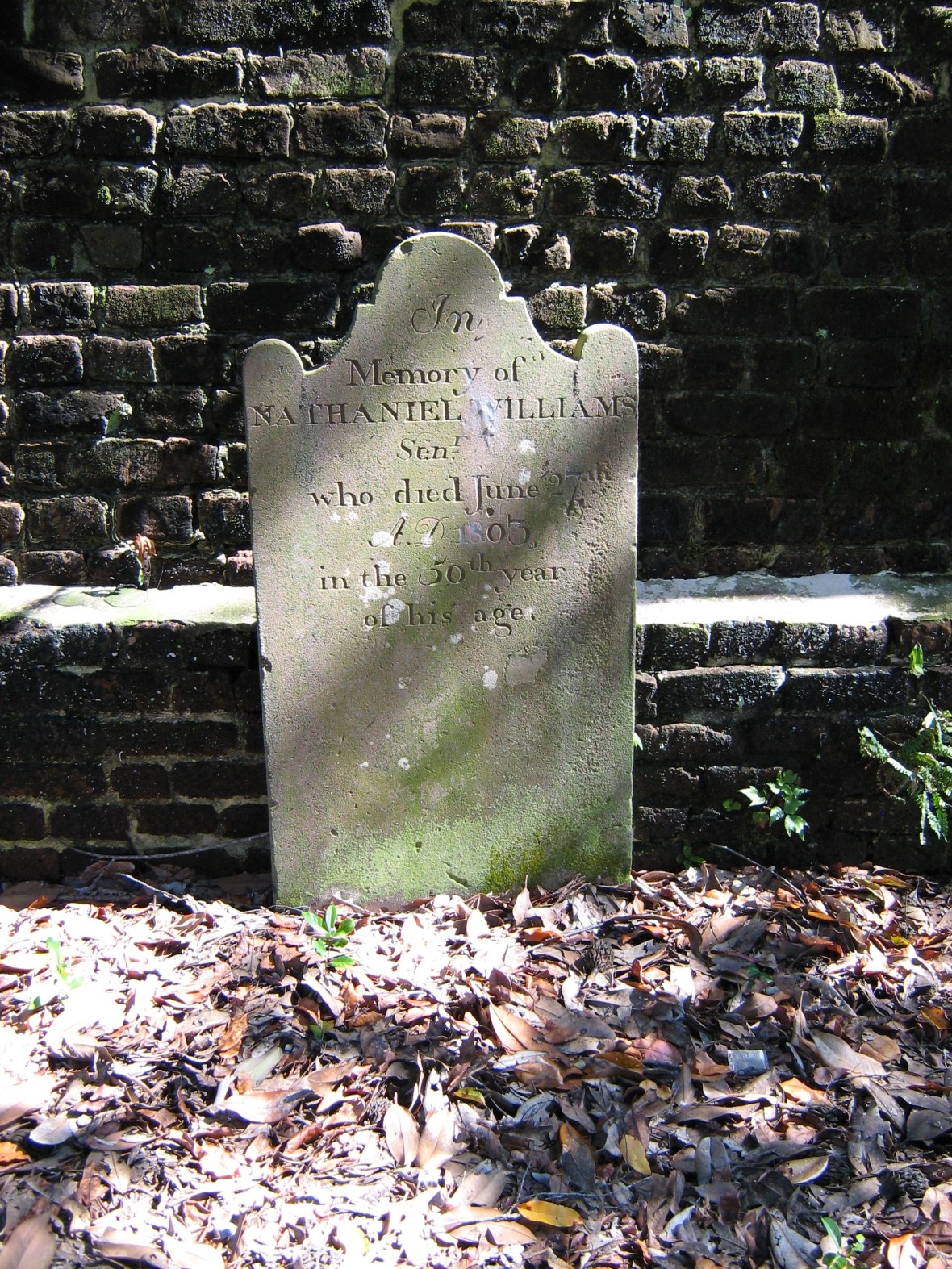
Picnics in cemeteries are not news to archaeologists. Excavations in cemeteries often turn up soda bottles, alcohol bottles, toys, and bullets. Yes, bullets. In 1999, Chicora Foundation archaeologists mapped Colonial Park cemetery with a penetrometer survey (a penetrometer measures soil compaction). Their main goal was to map unmarked graves (an astonishing 8,678 unmarked graves were found in addition to the 560 marked graves). They also conducted a small excavation and found many late-1800s artifacts from citizens enjoying the park including lamp parts, soda and alcohol glass bottle fragments, toys, pipes, and shell casings and bullets. Few clothing artifacts or elaborate coffin hardware was found, so the burials were probably simple, shrouds and simple wood coffins.
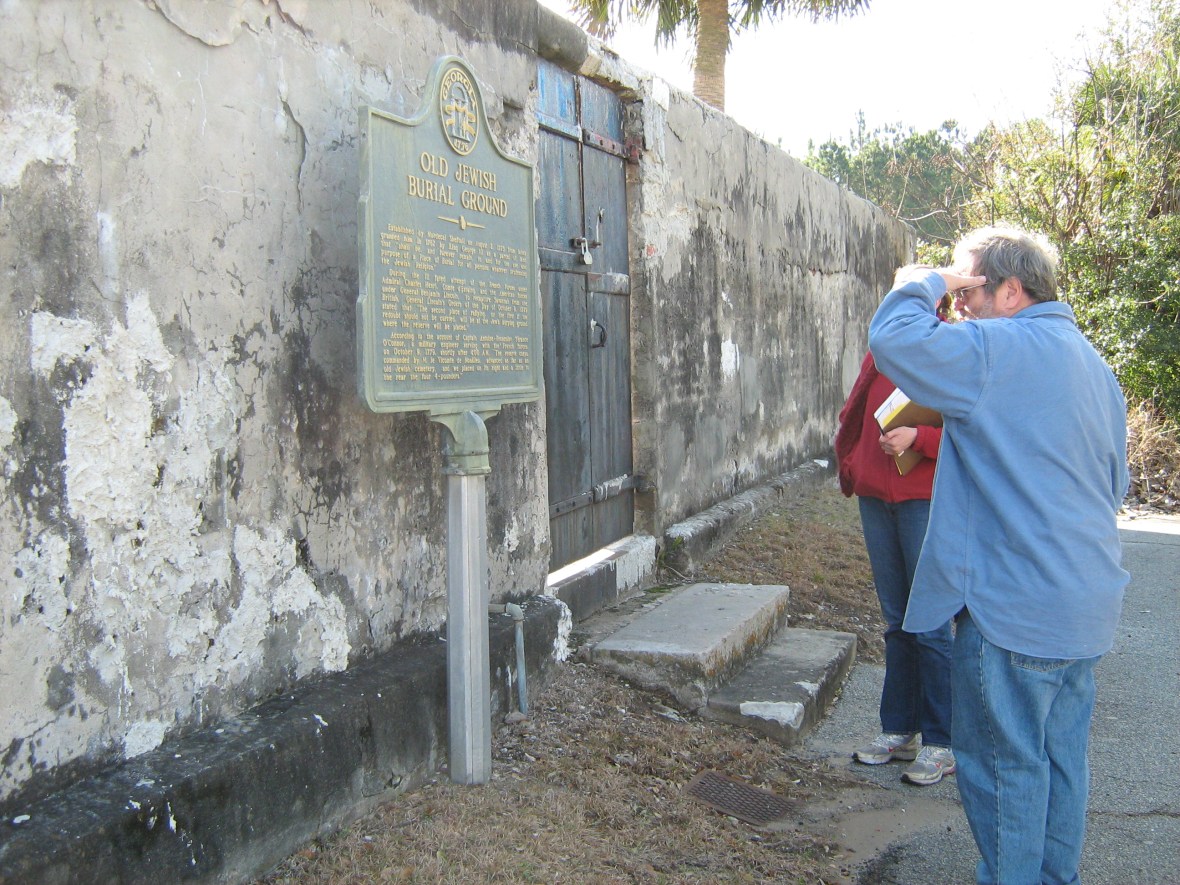
Sheftall Cemetery
Two eighteenth century Jewish Cemeteries sit behind Esther Garrison Elementary School on Jones Street. The Levi Sheftall Cemetery was the subject of archaeological investigation in 1990. No graves were excavated, but accumulated soil around the headstones was excavated, and the cemetery was mapped. Lots of children’s marbles were found as well as bullets, ranging in size from 18th century lead musket balls to a modern .45 caliber automatic.
Gravestone in Colonial Park Cemetery
The cemetery picnicking trend ended around the 1920s, as more public parks were established and the death rate dropped, leading to less need for cemetery visitation. Kendall concludes, “Today, more than 100 years since Americans debated the trend, you’d be hard-pressed to find many cemeteries—especially those in big cities—with policies or available land that allow for picnics. Green-Wood Cemetery in Brooklyn, for example, has a no picnic rule.”
My three-year-old insisted on going to Tybee today. He’s had worse suggestions, so we went and had a few relaxing hours on the beach. Me reading, him playing with his toy dump truck and loader. I haven’t taken my son up in the lighthouse yet, mostly because I think that will end in me carrying him. It’s a lot of stairs.
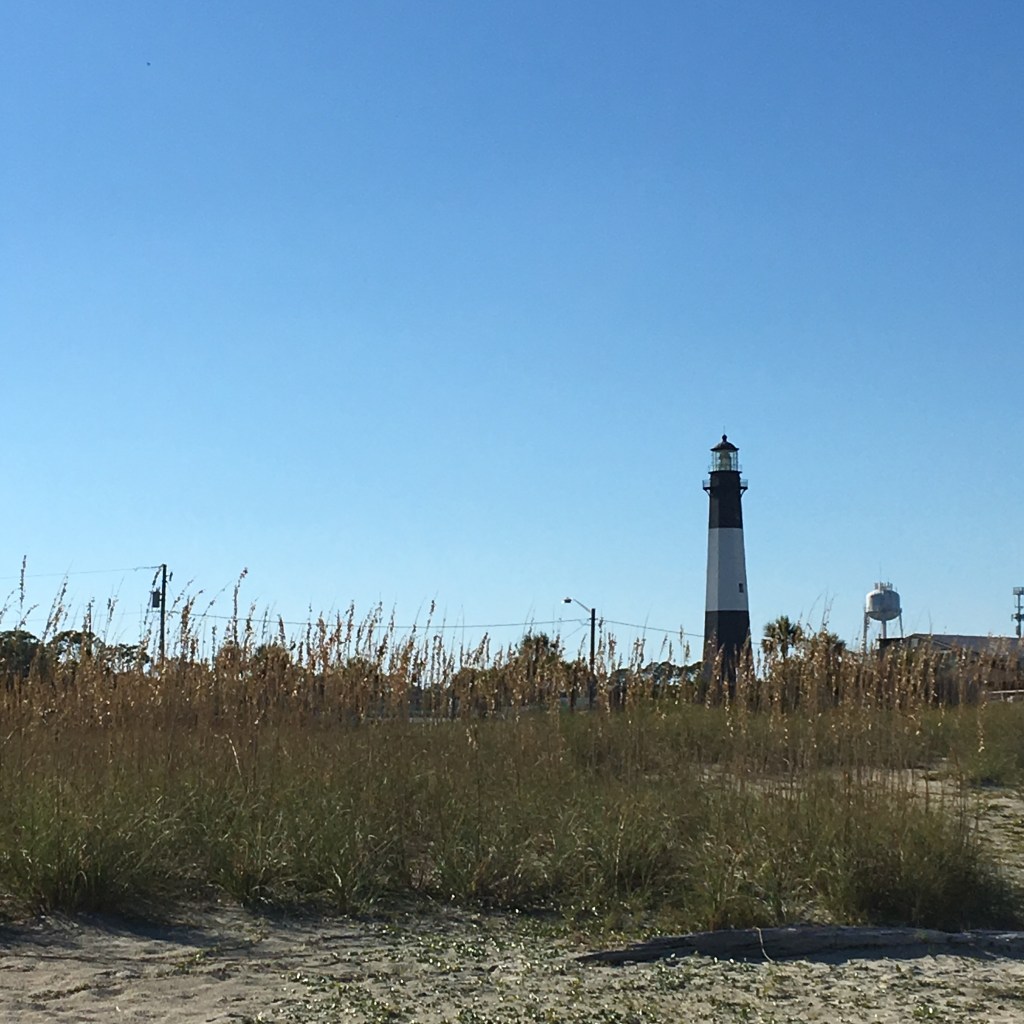
Tybee Lighthouse from the beach.
James Oglethorpe had a navigational marker placed on the property now housing the lighthouse in 1733, the same year he founded Georgia. A lighthouse has stood in this area ever since. By 1736 Noble Jones, Georgia’s surveyor, supervised the construction of a 90-foot wooden tower, although it did not have a light. This daytime navigation marker was the largest on the British-controlled east coast. In 1741, a storm destroyed the tower.
A second, 90 to 94 foot lighthouse was built by 1742. It too did not have a light. An associated Keeper’s House was also built nearby. This lighthouse was gone by 1768, a victim of the harsh coastal elements. The third lighthouse was built in 1773 and destroyed by fire in 1791. The current lighthouse, a 100-foot, octagonal-base brick lighthouse, was built in 1791, probably on the foundation of the 1773 building. Note: the Tybee Light Station is a museum today; entry fees apply.
The Assistant Keeper’s House was restored in 2003. Since the restoration included some ground-disturbing activities, the Tybee Island Historical Society, which runs the Light Station and the Tybee Museum, called in archaeologists to make sure they weren’t destroying historic resources.
Archaeologists examined two corners the brick foundation beneath the existing, circa 1885 house. They excavated two test units (square areas that were dug out), finding nearly 5,000 artifacts in their small excavation. Artifacts recovered included architectural materials like brick, mortar, and window glass; kitchen ceramics, bottle glass, and tin cans were also discovered. Food remains showed the dietary variety: turtle, beef, pork, foul, fish, and eggs were eaten on site. Shellfish were also an important part of the diet including oysters, clams, crab, and whelk. Personal artifacts were found as well: a brass finger ring, pocketknife fragments, a glass marble, mirror glass, newspaper scraps, matches, and a piece of engraved slate. Bullets and other armament artifacts were found as well as uniform buckles and a brass insignia. Many of these are probably from the Civil War soldiers camped near the lighthouse.
The brick foundation under the current house is the footing for an earlier keeper’s house. A brown transfer printed sherd (ceramic fragment) was found in the foundation’s builder’s trench. Brown transfer printed ceramics were first made in 1809, so the building must date after 1809. The historical record states this circa 1809 house burned in 1885. Melted window and bottle glass were found with exploded bricks and highly tempered (heat-treated) nails. When iron is heated to extremely high temperatures, the nails are preserved and rust-free.
Artifacts from the 1700s were also found, so an even earlier building was also probably on this site. While no structural remains were found for an earlier building, an undated brick hearth and chimney pad were found, possibly from this 1700s era building.
A neighbor was recently lunching in Daffin Park and found an 1883 Liberty Penny lying on the surface. His excited Facebook post showed how important local history, and especially tangible artifacts, are to us. Archaeologists vary on how excitable they get when non-archaeologists take artifacts. Legally speaking, taking any artifact from someone else’s property is stealing. However, some archaeologists acknowledge that one or two artifacts taken from a surface context (aka no digging*) probably won’t seriously damage a site. Of course, on public property, if everyone takes one or two artifacts, this can add up.
1883 Liberty penny from Daffin Park
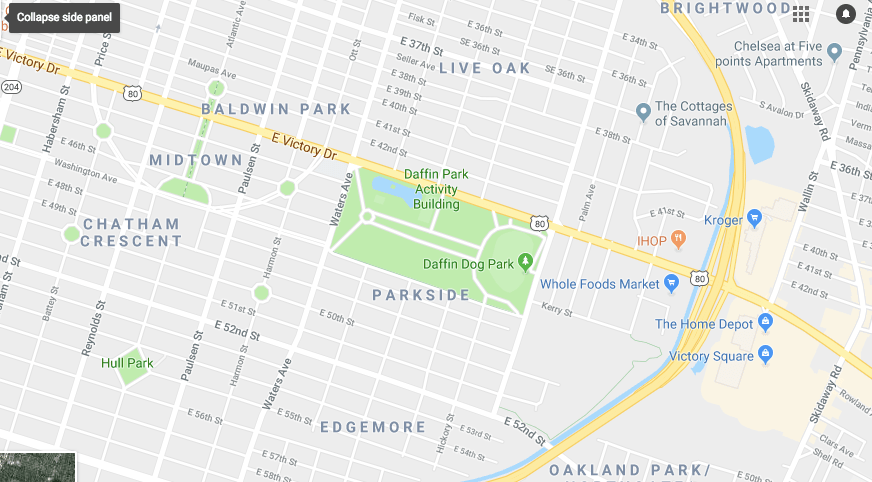
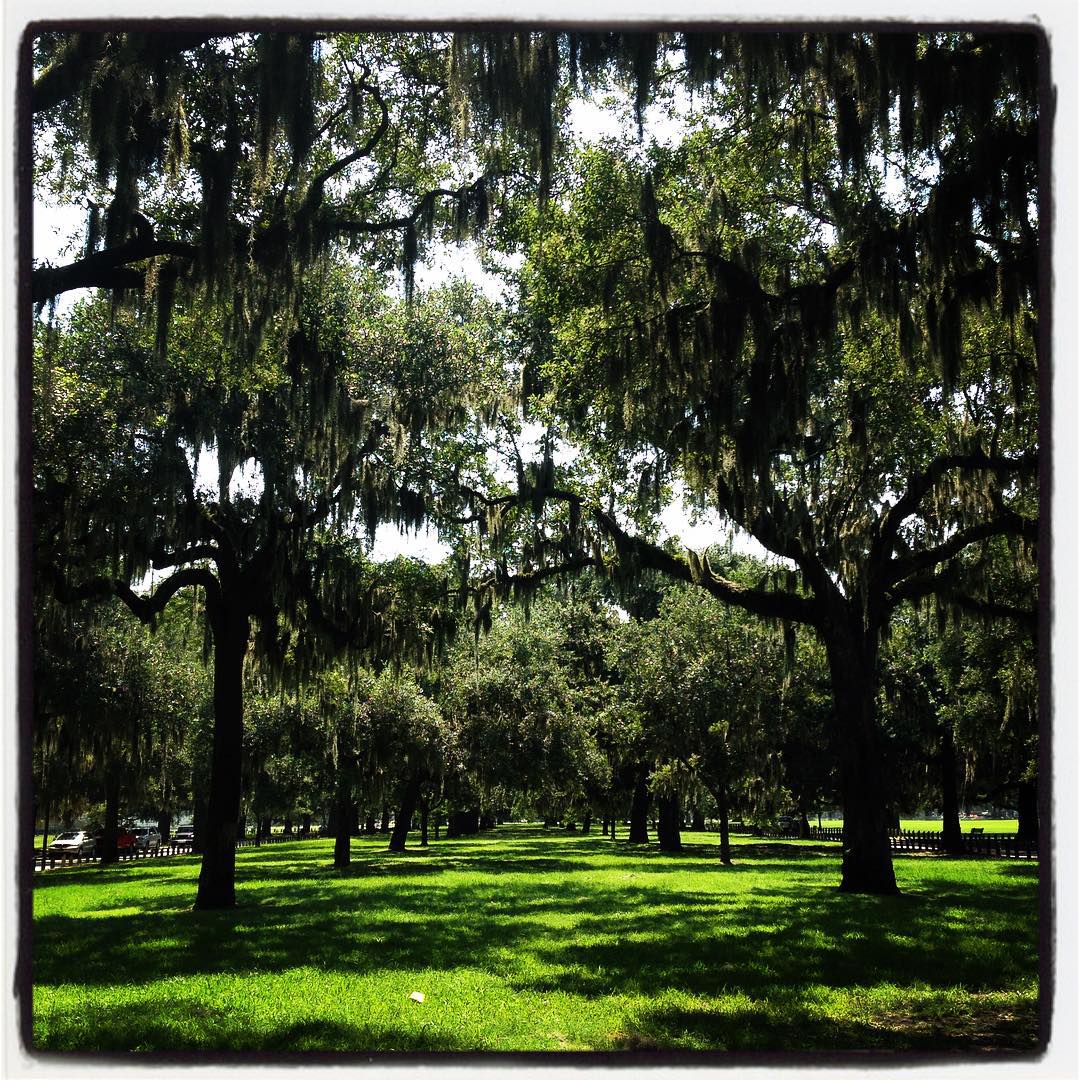
Designed by John Nolen, Daffin Park was founded in 1907, completed in 1909, and is part of the Parkside Place Historic District. The Beaux Arts-inspired Daffin Park is named after Philip Daffin, the first Chairman of the Savannah Park and Tree Commission. The park has always been designated for athletic pursuits, from the professional to the amateur. Grayson Stadium, built in 1941, replaced the older 1930s Municipal Stadium. Grayson Stadium encroached on Herty Park, which retains its original character as a pine grove, but today is also a dog park. The stadium also altered the park’s larger structure by eliminating the eastern circular drive. The east-west central roads have two live oak-lined allees creating a 210-foot-wide central mall that connected the two circular drives and four diagonal roads that lead to each corner of the park.
Google Maps snapshot showing how the park’s west end has been altered by Grayson Stadium, leaving the park less symmetrical than the original.
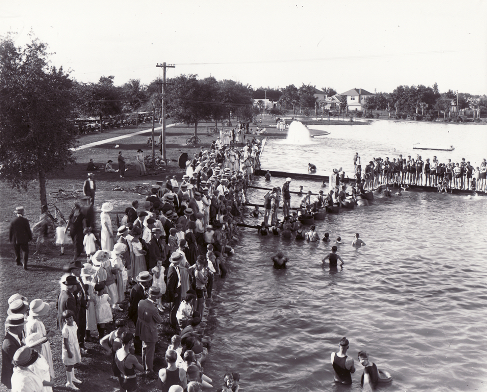
Athletic fields north and south of the mall are still intact today, as is the children’s playground at Waters and Washington streets, albeit with updated playground equipment. Originally the southern open fields were occasionally used an a land strip for small planes. In addition to the open fields, today the park has specific areas for beach volleyball, tennis, basketball, and fishing. (Yes! There are fish and turtles in the lake). The present in-ground pool replaced an earlier, less formal pool. Tom Barton wrote, “The lake that fronts Victory Drive has its own mini-history. The original wet spot was created in the shape of the 48 contiguous United States. Years ago, kids would sneak into the lake and avoid paying a nickel for a required, pre-dip soapy shower [before entering the whites-only pool]. Bathers could rent suits as well – which explains the soapy showers.”
Photograph of the Daffin Park Swimming Pool, 1905. From the Edward Girard Photographs collection, MS 1374. Source: Georgia Historical Society
Robin Wright Gunn recalls the park in the early 1970s, “Sometime during that era I recall several instances of riding in the back seat of the car, Mom at the wheel, as we rolled past the corner of Victory Drive and Bee Road, the location of Daffin Park, a somewhat neglected section of the unremarkably landscaped public facility. At some point in this period, less than a decade after Daffin Park was center stage for two racial desegregation lawsuits, this corner of Daffin became known as “The People’s Park,” the unofficial gathering place for Savannah’s hippies.” She writes about her attempt to find anyone who admits to visiting the park regularly during this time, possibly because of the recreational drug use then associated with the park. “Pot was everywhere, and heroin was easy to find. Perhaps it’s that hardcore reputation that has made it difficult to find people willing to talk about this slice of local history,” wrote Gunn.
The mall with its live oak allée at Daffin Park’s center.
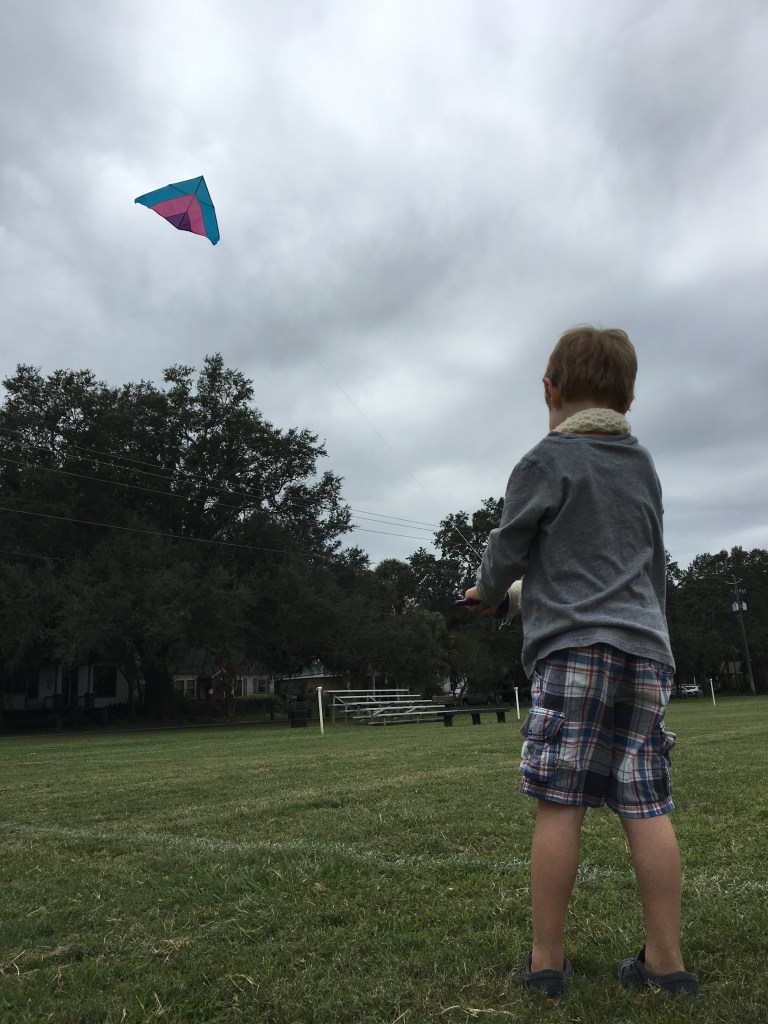
Today the park is beautiful as ever and is always full with people engaged in all forms of recreation. So let’s go fly a kite!
Kite flying on the football fields.
*It is illegal to dig on public property.
Sources:
Daffin Park-Parkside Place Historic District National Register of Historic Places Registration Form. Download a copy here.
October 9, 1779, is the anniversary of the Battle of Savannah. Most people don’t know there was a major Revolutionary War battle in downtown Savannah. At 800 casualties, this is considered one of the bloodiest battles of the American Revolution. However, only approximately 50 of these were British. We lost. Badly. The British held Savannah until the war’s end.
Archaeology has contributed to to our knowledge of this event. The Coastal Heritage Society manages a small, but critical, portion of the battlefield, Battlefield Memorial Park. In 2005, the park was scheduled for rehabilitation and a make-over. Archaeologist Rita Elliott asked for one last chance to find the redoubt, or small fort that the Americans and their allies attacked in an attempt to retake Savannah. She was successful, and Rita’s findings were incorporated into the reconstructed redoubt, memorial stones, and interpretive signs throughout the park. This work was also the catalyst for two National Park Service American Battlefield Protection Program grants, starting in 2007. I was fortunate to be part of the “Savannah Under Fire” project team, who extended the excavations throughout downtown Savannah’s greenspaces, finding more intact pieces of the battlefield.
Archaeologists are often criticized for being “elitist” and not sharing artifacts or knowledge. Especially for this project, that cannot be farther from the truth. In addition to the signs on Battlefield Park, there is an exhibit in the Savannah History Museum next door, where you can see the artifacts recovered from the battlefield. The project’s social media is still floating around including this brochure and (my favorite) a video of us in the field. The technical reports for all phases of the project are available as free downloads on the LAMAR Institute website:
(While there, you can also look at more than 200 other archaeology reports from Georgia and the Southeast.)
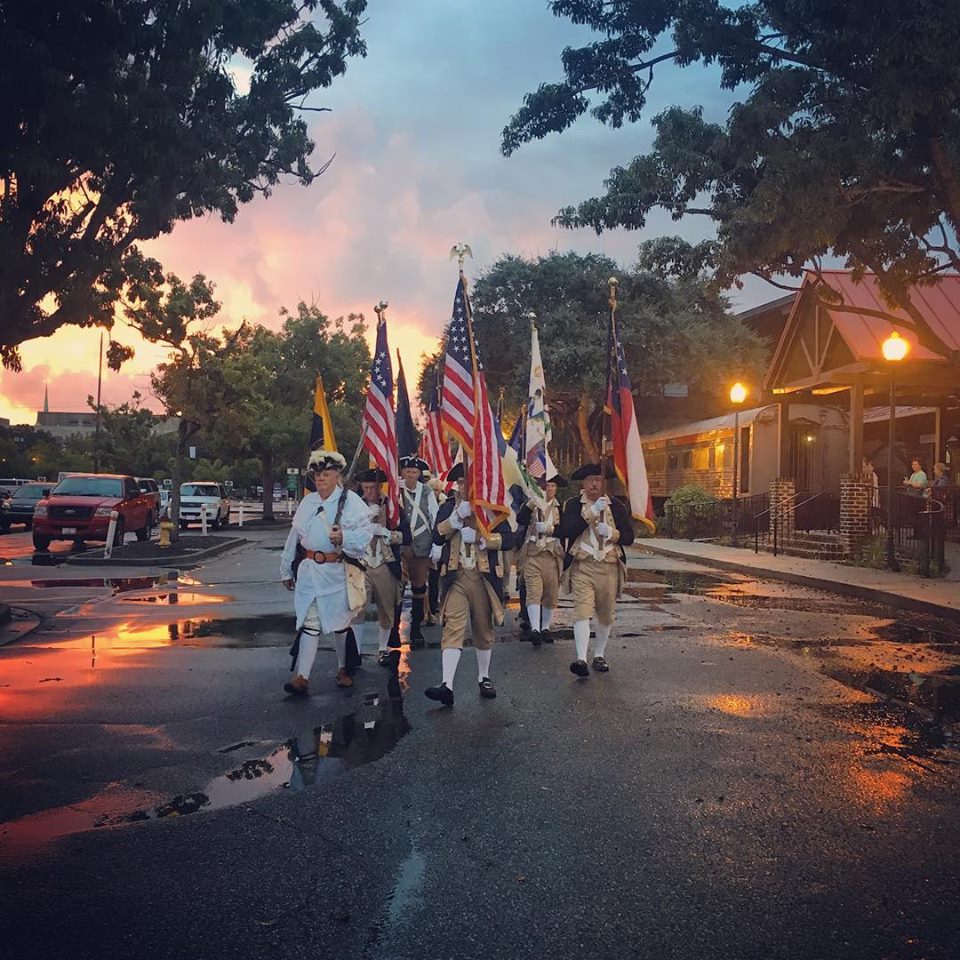
Finally, today, and every October 9, the Coastal Heritage Society holds a Battlefield Memorial March. I attended several years under obligation as an employee but was always impressed by the event and its significance.
October 9, 2018, Battlefield Memorial March. Photograph courtesy of the Coastal Heritage Society Facebook page.
I urge you to explore your Backyard History, our Revolutionary War battlefield. There is so much more than I could possibly cover in one blog post. Battlefield Memorial Park is a great place to start.
I deliberately named the Savannah Archaeological Alliance (unlike the orange color scheme, which was a bit random, but as a Syracuse alum, I’m liking it). The Savannah and Archaeological should be fairly obvious- we’re doing archaeology in Savannah. The Alliance part is the most critical. I started this little venture as one person, but I’m already gaining partners and alliances. And nothing can happen without a little help from our friends. As I roll out more projects, I will introduce some partners that will be pretty obvious- other historic sites, historians, preservationists, and anthropologists. Others may not be immediately intuitive.
As anthropologists, we are trained to think holistically, to look at the whole picture. The Savannah Archaeological Alliance (SAA) looks at preservation holistically, not just considering historic preservation, city planning, archives, and other types of historic and urban resources and professionals. True, holistic preservation needs a healthy, local economy; SAA will always buy local when possible. True preservation also needs a healthy environment and in particular, good land conservation. For example, supporting family farms supports the preservation of archaeology sites. How? Attend your local farmer’s market*, buy local food, and keep family-owned farms in business. Small farms are good stewards of the land, and care about preserving their land in every sense of the word. Plowing and working the land does little to disturb archaeology sites. When small farms fail or when the next generation simply doesn’t want to continue farming, they have to sell their land, and to whom? Usually a developer.
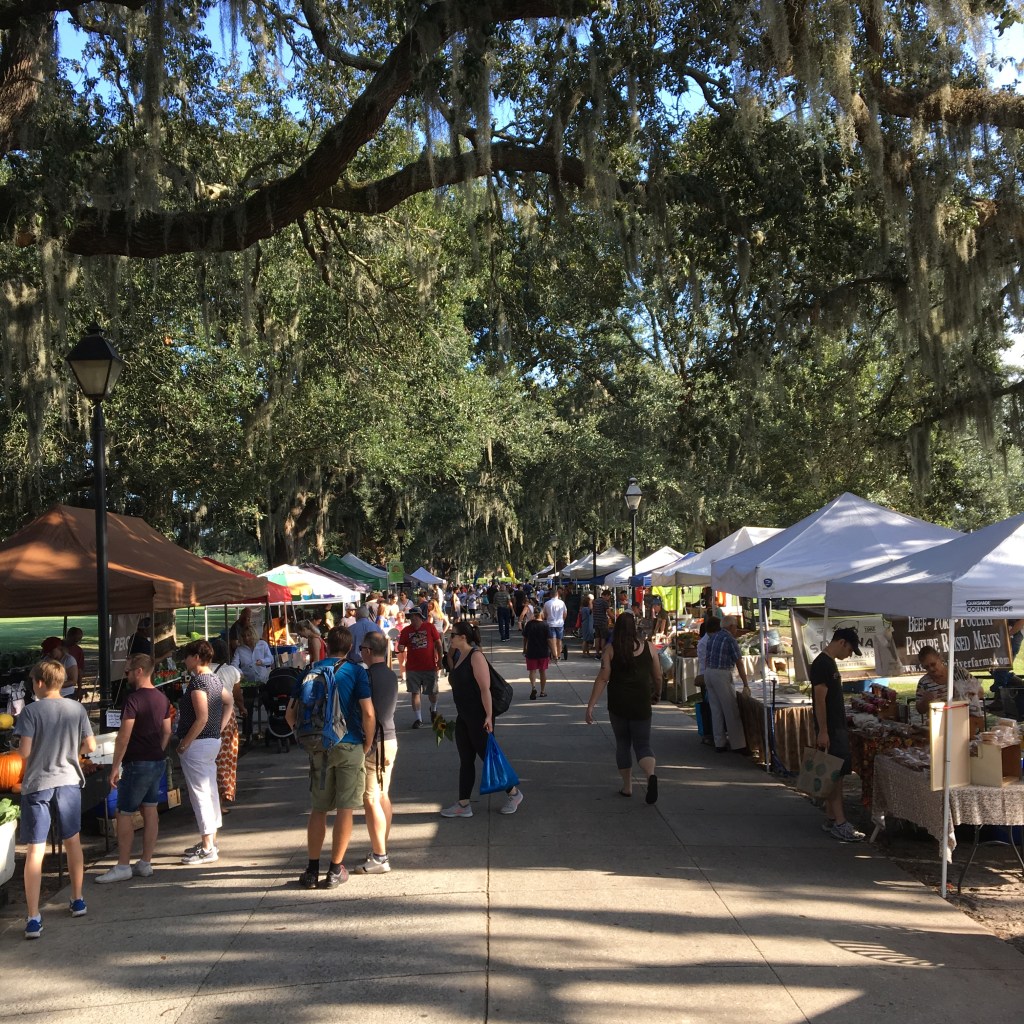
There are many ways to preserve archaeology sites and support preservation, so we’ll be highlighting some of those projects that work and some that don’t in our Alliance series. We’ll also share ways you can support preservation everyday. This fall, become a Friend of the Forsyth Farmer’s Market, and better yet, stop by the Market Saturday morning (9am-1pm) or buy from the Farm Truck throughout the week. See you at the Market.
Forsyth Farmers’ Market, Saturday, October 6, 2018.
*Full disclosure: I am a member of the Forsyth Farmer’s Market Board of Directors.
Multiple historic sites are hosting cool Halloween-themed programs. Consider a haunting with twist of history rather than a manufactured, fake presentation this season.
From Drowning to Dysentery: A Deadly Look at Fort Pulaski
“Fort Pulaski might not have its own ghost story, but our island has certainly witnessed its fair share of the macabre. On October 19th and 20th, join park staff for a special ranger-led lantern tour into the darker history of Cockspur Island. Tickets are $18 per person and can be purchased by calling 912-786-4383.” See their Facebook event for more details.
Beer, Bourbon & Bullets at Old Fort Jackson
While not directly Halloween-related, Civil War medicine is definitely scary. “’Beer, Bourbon & Bullets,’ will give attendees the chance to network and enjoy beer and bourbon cocktails, while getting a peek at military field medicine and the role that spirits played along with 19th-century tools and techniques.” Tickets are $20 in advance and $25 at the door; members get a $5 discount. Details available on their Facebook event.
Yellow Fever in Savannah 1820: Davenport House
This annual event is always a crowd-pleaser, plus it offers many dates and times. “This October see a historical recreation of Savannah’s dreadful Yellow Fever Epidemic of 1820 with particular emphasis on daily life of the period. A highlight is moving though the candlelit rooms witnessing enactments by costumed performers. In an area seldom seen by visitors, the fate and experiences of the uncounted half to the city’s population, both free and enslaved Africans, are revealed. Reservations recommended. Limited attendance.” Tickets are $14.95. More information is available on their Facebook event.
Halloween Hike at Oatland Island Wildlife Center
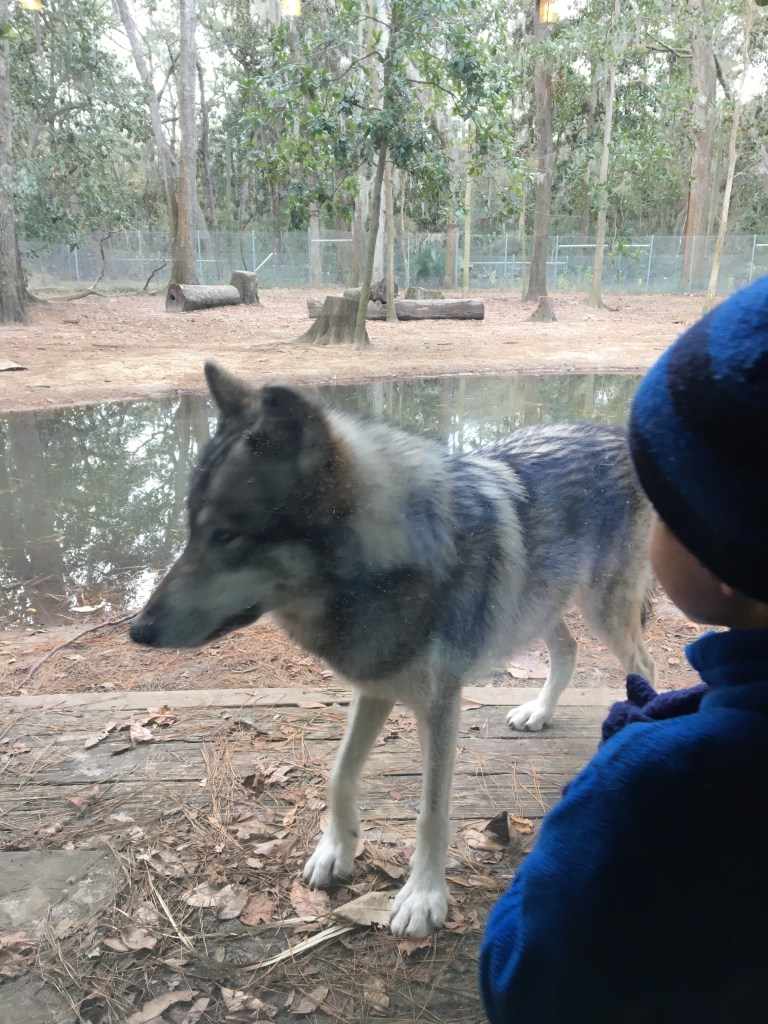
Oatland Island Wildlife Center has been closed for sometime due to this summer’s tornado. They are having two Halloween Hikes, despite the continued closure. Also, this is the only kid-friendly listing here. “Pick your date [October 19 or 20] and don’t be late. This is a cash only event $10 kids, $5 adults. Purchased wristbands allow kids to get candy. In an attempt to be eco friendly plastic bags will not be provided as in years past. Please bring a container for their candy. Costume up and spend the evening trick or treating with our furry friends!” Their Facebook page has two events listed, one for each day.
Oatland Island wolf
*Quoted material comes directly from the links, usually the organization’s Facebook event page.
As usual, Jim Morekis’ October 3rd Connect Savannah editorial is spot on. Morekis examines the Civic Center’s future and the city’s survey asking for our feedback. The aging, ugly Civic Center represents Savannah’s sliding scale of development and preservation. Morekis writes, “When history, or more accurately, historical character, becomes just another commoditized data point in a real estate marketing campaign, then it can be disposed of that much more easily… And make no mistake: Savannah is a product now, a commodity to be bought and sold at a profit.”
Savannah is at a tipping point; the very history and culture that made its tourism industry and encouraged so many to move here has become commodified. Remember the cruise ship near-debacle? The city spent nearly $200,000 on a second study to determine cruise ships were a bad idea. Short-term vacation rentals are a current debate, leading downtown residents to ask, who is this neighborhood for?
The National Historic Landmark District’s status is threatened, which is another indicator of too much development, not enough consideration of what development is really needed. Many do not realize that the Cuyler-Brownsville Historic District is also threatened. A 2017 Savannah Morning News editorial noted, “At least 100 buildings that contributed to the neighborhood’s historic designation about 20 years ago have been razed, according to the Chatham County Metropolitan Planning Commission, which tracks such data. Indeed, within the past five years, at least eight homes that dated back to the late 19th and early 20th centuries have been demolished.” And of course, we still have no archaeological ordinance, leading to countless, erased histories with each swipe of the backhoe.
So what is important to you? What is important to Savannah?
Morekis writes, “For many newer folks to town, the idea of Savannah’s history is just that — an idea. Not a relatable, everyday reality.” So this site will start an occasional series, BackyardHistory to connect Savannahians to their history and make it a relatable, everyday reality.
Please take the survey, tell the city what is important to you. Get engaged. Vote. Because doing nothing will lead to exactly that… nothing worthwhile left in Savannah.
The Phase 1 technical report on the Kiah House is now available! Click here to download a copy. The report includes preliminary historical research on Kiah House residents and analysis of the archaeological materials found. A few interesting tidbits:
Although Cuyler-Brownsville is an historically African American neighborhood, in the 1920s, 30s, and 40s, the Kiah House was occupied by Jewish immigrants from Austria and Poland.
The first African American residents were Tony and Maggie Everhart. Reverend Everhart was the Pastor of the Holy Coptic Ethiopian Church in the mid-1950s.
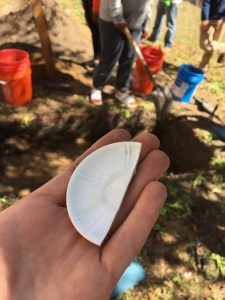
All of the children’s artifacts were found in during the Kiah Family occupation. These artifacts included glass and ceramic marbles, porcelain tea plates, and a possible doll’s head.
The initial test units show that the archaeological resources are intact and more research should be done.
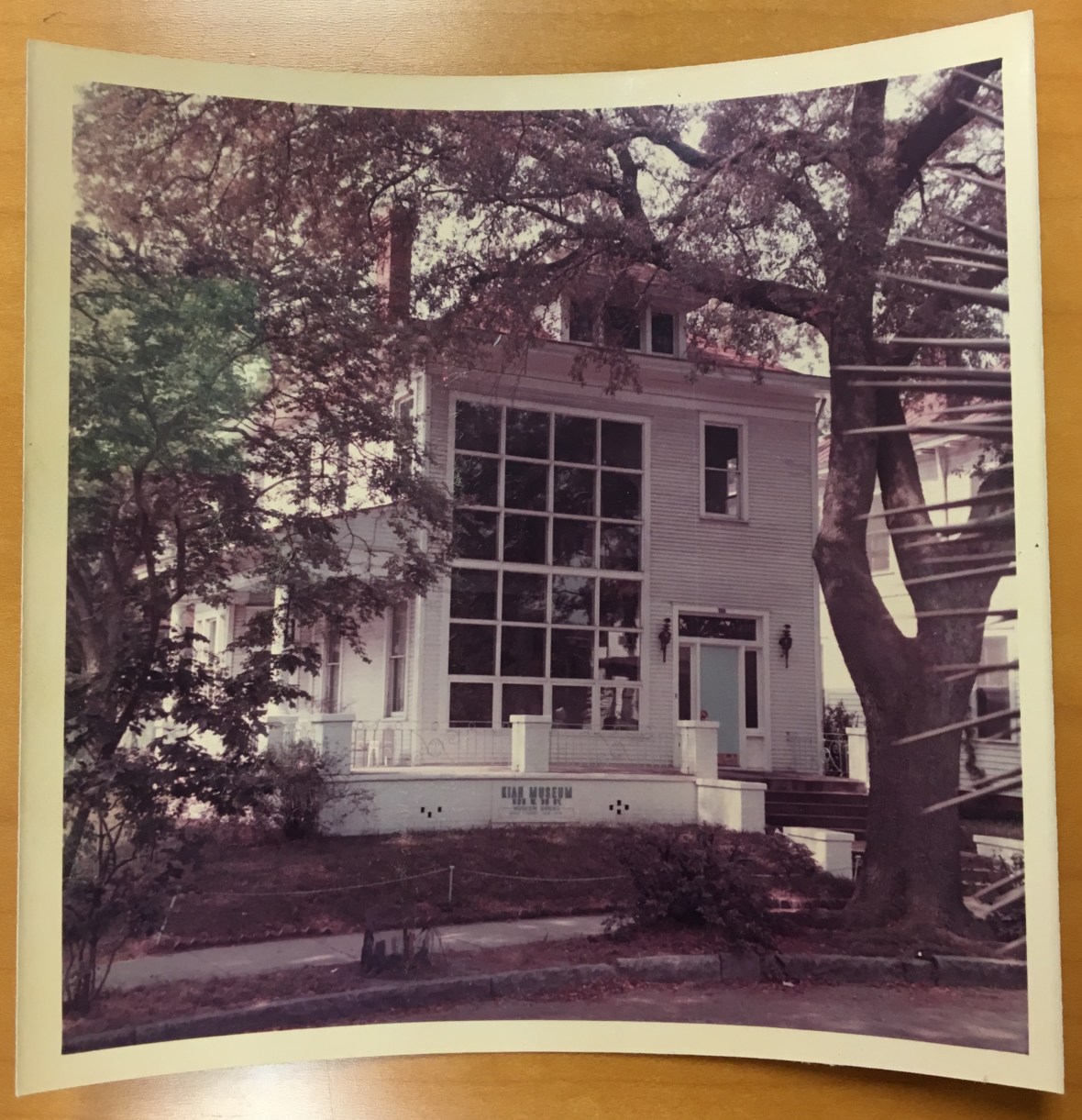
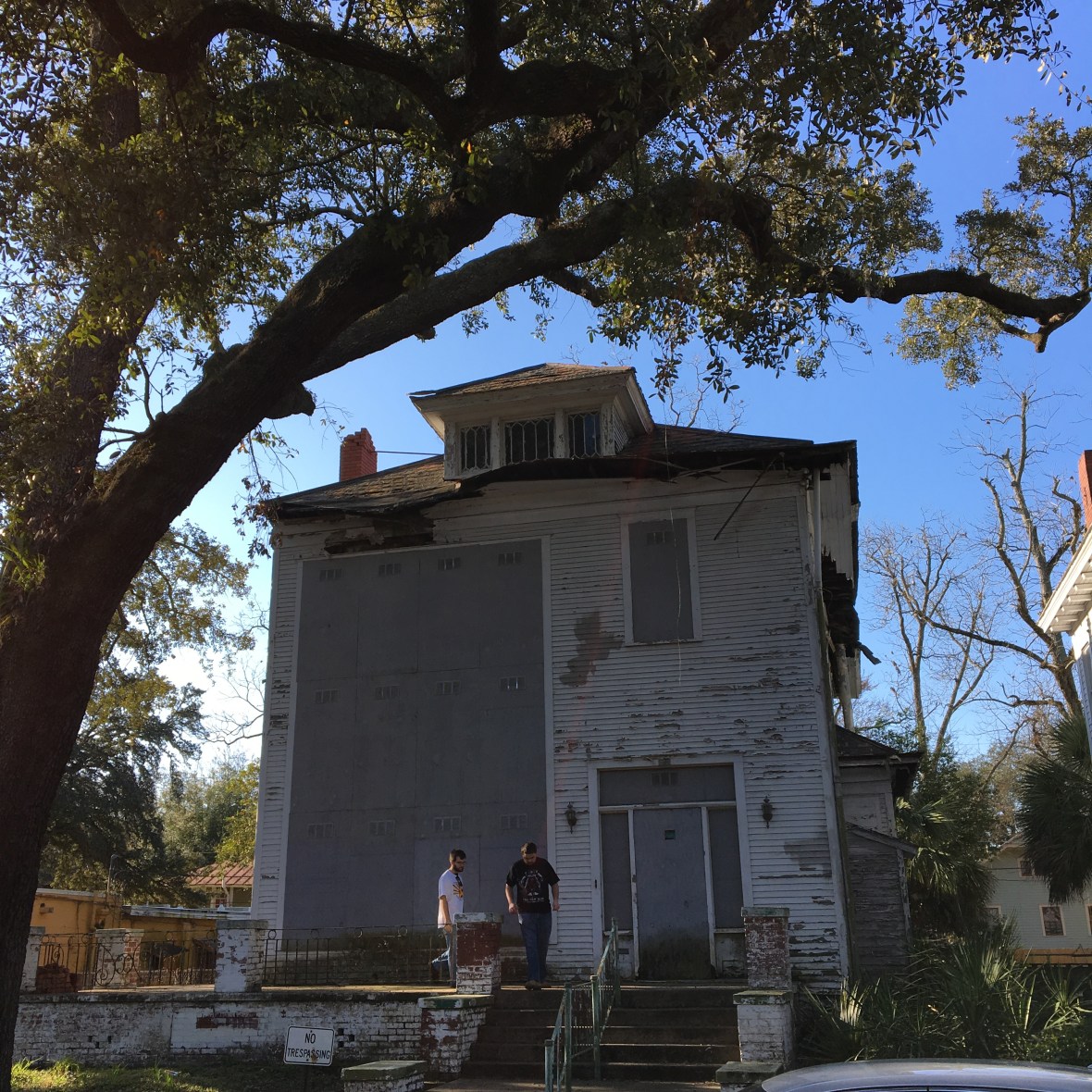
The Kiah House in an undated photograph. Courtesy of the Friends of the Kiah House Museum.The Kiah House, spring 2018, is in need of preservation.
One of our major initiatives is archaeological research at the Kiah House. Phase I investigations were conducted in the spring of 2018.
Archaeological and Historical Background
Located at 505 W. 36th street, the Kiah House is significant because it was the longtime residence of Dr. Calvin L. Kiah, a professor who led Savannah State College’s education department, and Virginia Kiah, a public school teacher from 1951-1963, artist, and curator of the Kiah House Museum on the home’s second floor. Dr. and Mrs. Kiah bought the house on May 5, 1959 from Marie F. Kelson. Mrs. Kiah died in 2001, and the house has been stuck in probate and unoccupied ever since (Segedy 2016). Consequently, the property has fallen into serious disrepair and is listed on the City of Savannah’s “100 Worst Properties”. “Because of the mayor’s agenda to combat blight properties this property is endangered. It’s important to be proactive regarding the documentation of the historical significance of the property through more oral history, community gatherings, cleanup campaigns, and an archaeological study. (Johnson-Simon 2017)
The Kiah House desperately needs preservation.
To the best of our knowledge, there has been no previous archaeology on this property, so we submitted the site to the Georgia Archaeological Site File. The Kiah House (9Ch1452) does not appear in the 1898 Sanborn Fire Insurance Maps, but it does appear on the 1916 version. The house is in the Cuyler-Brownsville neighborhood, which is one of the oldest African-American communities in Savannah. The neighborhood is bounded by Anderson Lane, 42nd Street, Montgomery Street, and Ogeechee Road (Johnson-Simon 2017).
Research Questions
This site holds potential for exploration of African-American history and bringing this history into greater and wider understanding. Research questions include:
What were people eating? Can we identify African-American foodways?
What types of medicine were used? What was the health status of the residents?
What consumer choices were the residents making?
Can we identify strategies for combating racism?
Once this site specific research is completed and the technical report is written, the research can be extended. The author has been involved in several late 19th, early 20th century African-American archaeological sites in Savannah. A comparative study is needed between the rural Freedmen school (1878-ca. 1890s) on Skidaway Island, the Sorrel-Weed Carriage House, perhaps showing African-American domestic labor in the late 1800s, the nineteenth century Railroad Ward houses, and the Kiah House. By comparing these very different types of sites, we can start to understand the breadth of the post-bellum African-American experience in Savannah.
Methodology
The literature search will gain basic information about the property and its inhabitants. Deed records, census records, and city directories are important starting points. The archaeological literature will also be searched for comparative examples.
We found several children’s artifacts including this tea saucer and several marbles.
The front yard is small, largely planted and difficult to access archaeologically. The western yard is also quite small. We placed one 1×2 meter test unit in the eastern side yard and a 1×1 meter test unit in the backyard. Test units will be added as time and the availability of labor permits. Students from the Armstrong Campus of Georgia Southern University and Savannah State University were the field crew for this project. Lab work was conducted on the Armstrong Campus Anthropology Lab. Analysis is ongoing.
Our partners are Dr. Deborah Johnson-Simon with the Center for the Study of African and African Diaspora Museums and Communities, (CFSAADMC), whose mandate is to tell the stories of African Diaspora museums, and the Friends of the Kiah House Museum and Foundation, which oversees the historic preservation efforts of one of the first museums in Savannah started by African Americans. This researcher believes there is great potential to combine public archaeology with the ethnographic research and neighborhood oral histories collected by Dr. Deborah Johnson-Simon. Not only will this provide a greater database of information, but this will allow for more community initiatives and involvement.
The excavations were open to the public and well attended. We made the front page of the Savannah Morning News and WTOC did a story. The technical report, results, and next steps will be available soon!
Bibliography
Johnson-Simon, Deborah
2017Kiah House Museum Request, Powerpoint.
Sanborn Fire Insurance Maps, 1898 and 1916, available via the Digital Library of Georgia (http://dlg.galileo.usg.edu).
Saunders, CeCe and Susan R. Chandler
2001Get the Lead Out. In Dangerous Places: Health, Safety, and Archaeology, David A. Poirier and Kenneth L. Feder, editors, pp. 189-204. Greenwood Published Group, Westport, CN.
Segedy, Andria
2016Savannah Movement Fighting for Kiah House Museum. Savannah Morning News 20 June (online), Savannah, Ga.
Savannah Archaeological Alliance welcomes all partnerships with archaeologists, students, historic preservationists, museums, archives, muppets, and the general public. Email us to discuss a collaboration, request a presentation, or inquire about our public programs such as walking tours and school programs.












 Savannah Archaeological Alliance