Alliance series, Backyard History, public archaeology

October 9, 1779: Backyard History

October 9, 1779, is the anniversary of the Battle of Savannah. Most people don’t know there was a major Revolutionary War battle in downtown Savannah. At 800 casualties, this is considered one of the bloodiest battles of the American Revolution. However, only approximately 50 of these were British. We lost. Badly. The British held Savannah until the war’s end.

Archaeology has contributed to to our knowledge of this event. The Coastal Heritage Society manages a small, but critical, portion of the battlefield, Battlefield Memorial Park. In 2005, the park was scheduled for rehabilitation and a make-over. Archaeologist Rita Elliott asked for one last chance to find the redoubt, or small fort that the Americans and their allies attacked in an attempt to retake Savannah. She was successful, and Rita’s findings were incorporated into the reconstructed redoubt, memorial stones, and interpretive signs throughout the park. This work was also the catalyst for two National Park Service American Battlefield Protection Program grants, starting in 2007. I was fortunate to be part of the “Savannah Under Fire” project team, who extended the excavations throughout downtown Savannah’s greenspaces, finding more intact pieces of the battlefield.

Archaeologists are often criticized for being “elitist” and not sharing artifacts or knowledge. Especially for this project, that cannot be farther from the truth. In addition to the signs on Battlefield Park, there is an exhibit in the Savannah History Museum next door, where you can see the artifacts recovered from the battlefield. The project’s social media is still floating around including this brochure and (my favorite) a video of us in the field. The technical reports for all phases of the project are available as free downloads on the LAMAR Institute website:

(While there, you can also look at more than 200 other archaeology reports from Georgia and the Southeast.)

Finally, today, and every October 9, the Coastal Heritage Society holds a Battlefield Memorial March. I attended several years under obligation as an employee but was always impressed by the event and its significance.
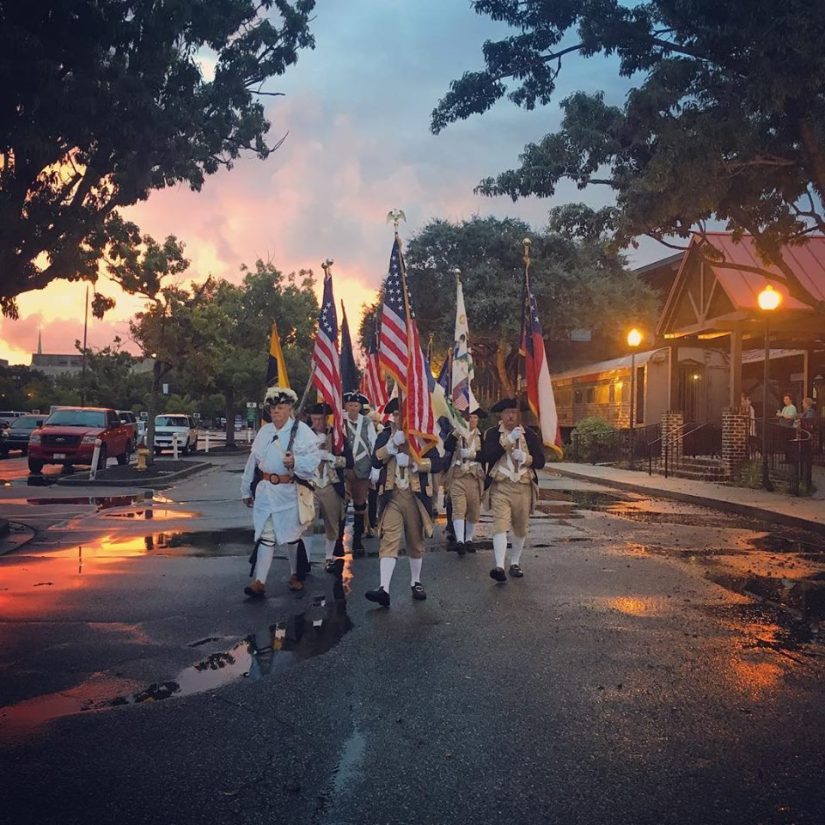
October 9, 2018, Battlefield Memorial March. Photograph courtesy of the Coastal Heritage Society Facebook page.

I urge you to explore your Backyard History, our Revolutionary War battlefield. There is so much more than I could possibly cover in one blog post. Battlefield Memorial Park is a great place to start.

Kiah House

Kiah House Phase 1: Report now available

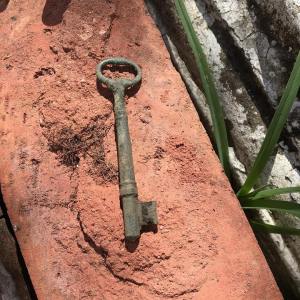
Skeleton key
Skeleton key found at the Kiah House.

The Phase 1 technical report on the Kiah House is now available! Click here to download a copy. The report includes preliminary historical research on Kiah House residents and analysis of the archaeological materials found. A few interesting tidbits:

  • Although Cuyler-Brownsville is an historically African American neighborhood, in the 1920s, 30s, and 40s, the Kiah House was  occupied by Jewish immigrants from Austria and Poland.
  • The first African American residents were Tony and Maggie Everhart. Reverend Everhart was the Pastor of the Holy Coptic Ethiopian Church in the mid-1950s.
  • All of the children’s artifacts were found in during the Kiah Family occupation. These artifacts included glass and ceramic marbles, porcelain tea plates, and a possible doll’s head.
  • The initial test units show that the archaeological resources are intact and more research should be done.
IMG_1811 edited
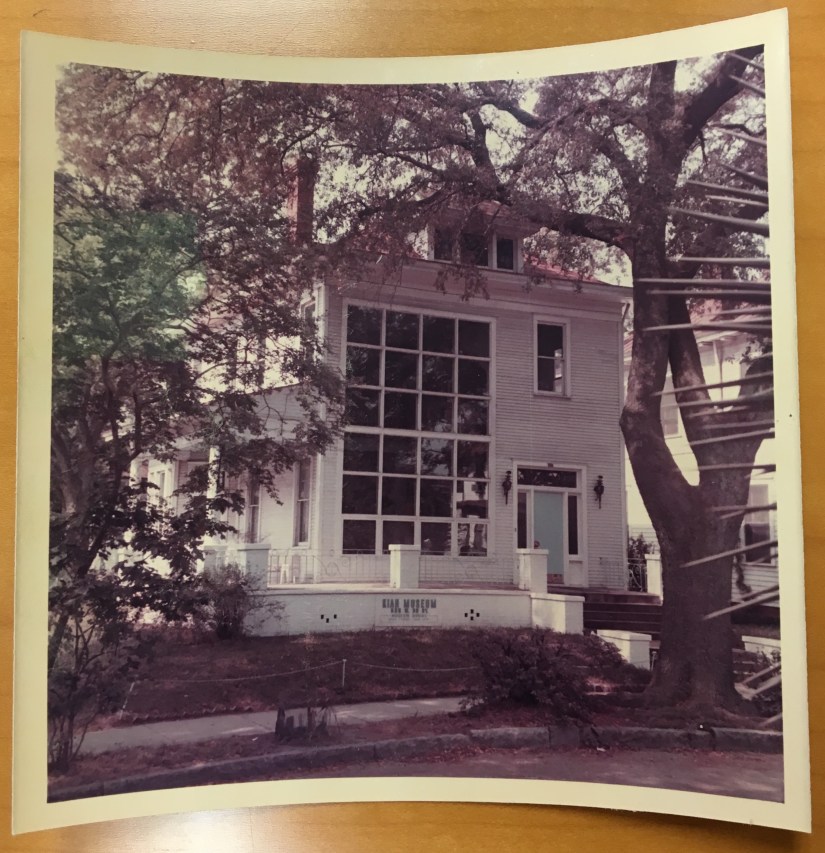
The Kiah House in an undated photograph. Courtesy of the Friends of the Kiah House Museum.
IMG_1898
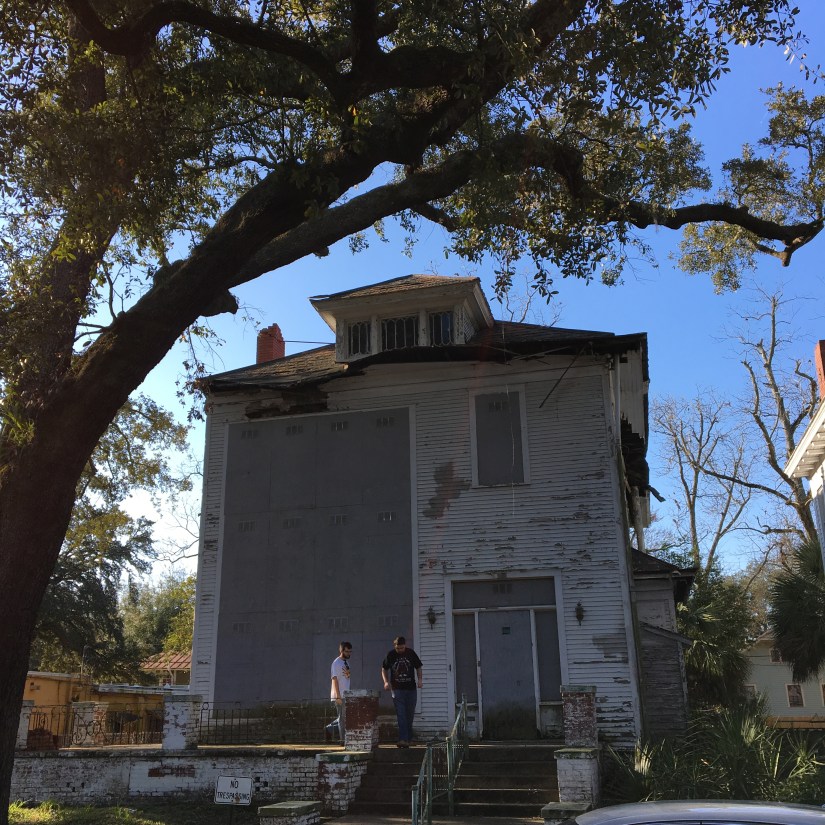
The Kiah House, spring 2018, is in need of preservation.
Kiah House

Kiah House Project

One of our major initiatives is archaeological research at the Kiah House. Phase I investigations were conducted in the spring of 2018.

Archaeological and Historical Background

Located at 505 W. 36th street, the Kiah House is significant because it was the longtime residence of Dr. Calvin L. Kiah, a professor who led Savannah State College’s education department, and Virginia Kiah, a public school teacher from 1951-1963, artist, and curator of the Kiah House Museum on the home’s second floor. Dr. and Mrs. Kiah bought the house on May 5, 1959 from Marie F. Kelson. Mrs. Kiah died in 2001, and the house has been stuck in probate and unoccupied ever since (Segedy 2016). Consequently, the property has fallen into serious disrepair and is listed on the City of Savannah’s “100 Worst Properties”.  “Because of the mayor’s agenda to combat blight properties this property is endangered. It’s important to be proactive regarding the documentation of the historical significance of the property through more oral history, community gatherings, cleanup campaigns, and an archaeological study. (Johnson-Simon 2017)

IMG_1898
The Kiah House desperately needs preservation.

To the best of our knowledge, there has been no previous archaeology on this property, so we submitted the site to the Georgia Archaeological Site File. The Kiah House (9Ch1452) does not appear in the 1898 Sanborn Fire Insurance Maps, but it does appear on the 1916 version. The house is in the Cuyler-Brownsville neighborhood, which is one of the oldest African-American communities in Savannah. The neighborhood is bounded by Anderson Lane, 42nd Street, Montgomery Street, and Ogeechee Road (Johnson-Simon 2017).

Research Questions

This site holds potential for exploration of African-American history and bringing this history into greater and wider understanding. Research questions include:

  • What were people eating? Can we identify African-American foodways?
  • What types of medicine were used? What was the health status of the residents?
  • What consumer choices were the residents making?
  • Can we identify strategies for combating racism?

Once this site specific research is completed and the technical report is written, the research can be extended. The author has been involved in several late 19th, early 20th century African-American archaeological sites in Savannah. A comparative study is needed between the rural Freedmen school (1878-ca. 1890s) on Skidaway Island, the Sorrel-Weed Carriage House, perhaps showing African-American domestic labor in the late 1800s, the nineteenth century Railroad Ward houses, and the Kiah House. By comparing these very different types of sites, we can start to understand the breadth of the post-bellum African-American experience in Savannah.

Methodology

The literature search will gain basic information about the property and its inhabitants.  Deed records, census records, and city directories are important starting points. The archaeological literature will also be searched for comparative examples.

IMG_2037
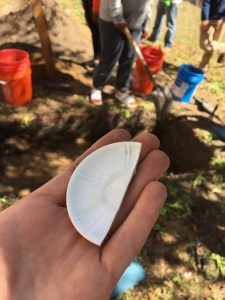
We found several children’s artifacts including this tea saucer and several marbles.

The front yard is small, largely planted and difficult to access archaeologically. The western yard is also quite small. We placed one 1×2 meter test unit in the eastern side yard and a 1×1 meter test unit in the backyard. Test units will be added as time and the availability of labor permits. Students from the Armstrong Campus of Georgia Southern University and Savannah State University were the field crew for this project. Lab work was conducted on the Armstrong Campus Anthropology Lab. Analysis is ongoing. 

Our partners are Dr. Deborah Johnson-Simon with the Center for the Study of African and African Diaspora Museums and Communities, (CFSAADMC), whose mandate is to tell the stories of African Diaspora museums, and the Friends of the Kiah House Museum and Foundation, which oversees the historic preservation efforts of one of the first museums in Savannah started by African Americans. This researcher believes there is great potential to combine public archaeology with the ethnographic research and neighborhood oral histories collected by Dr. Deborah Johnson-Simon. Not only will this provide a greater database of information, but this will allow for more community initiatives and involvement.

The excavations were open to the public and well attended. We made the front page of the Savannah Morning News and WTOC did a story. The technical report, results, and next steps will be available soon!

Bibliography

Johnson-Simon, Deborah

2017    Kiah House Museum Request, Powerpoint.

Sanborn Fire Insurance Maps, 1898 and 1916, available via the Digital Library of Georgia (http://dlg.galileo.usg.edu).

Saunders, CeCe and Susan R. Chandler

2001    Get the Lead Out. In Dangerous Places: Health, Safety, and Archaeology, David A. Poirier and Kenneth L. Feder, editors, pp. 189-204. Greenwood Published Group, Westport, CN.

Segedy, Andria

2016    Savannah Movement Fighting for Kiah House Museum. Savannah Morning News 20 June (online), Savannah, Ga.